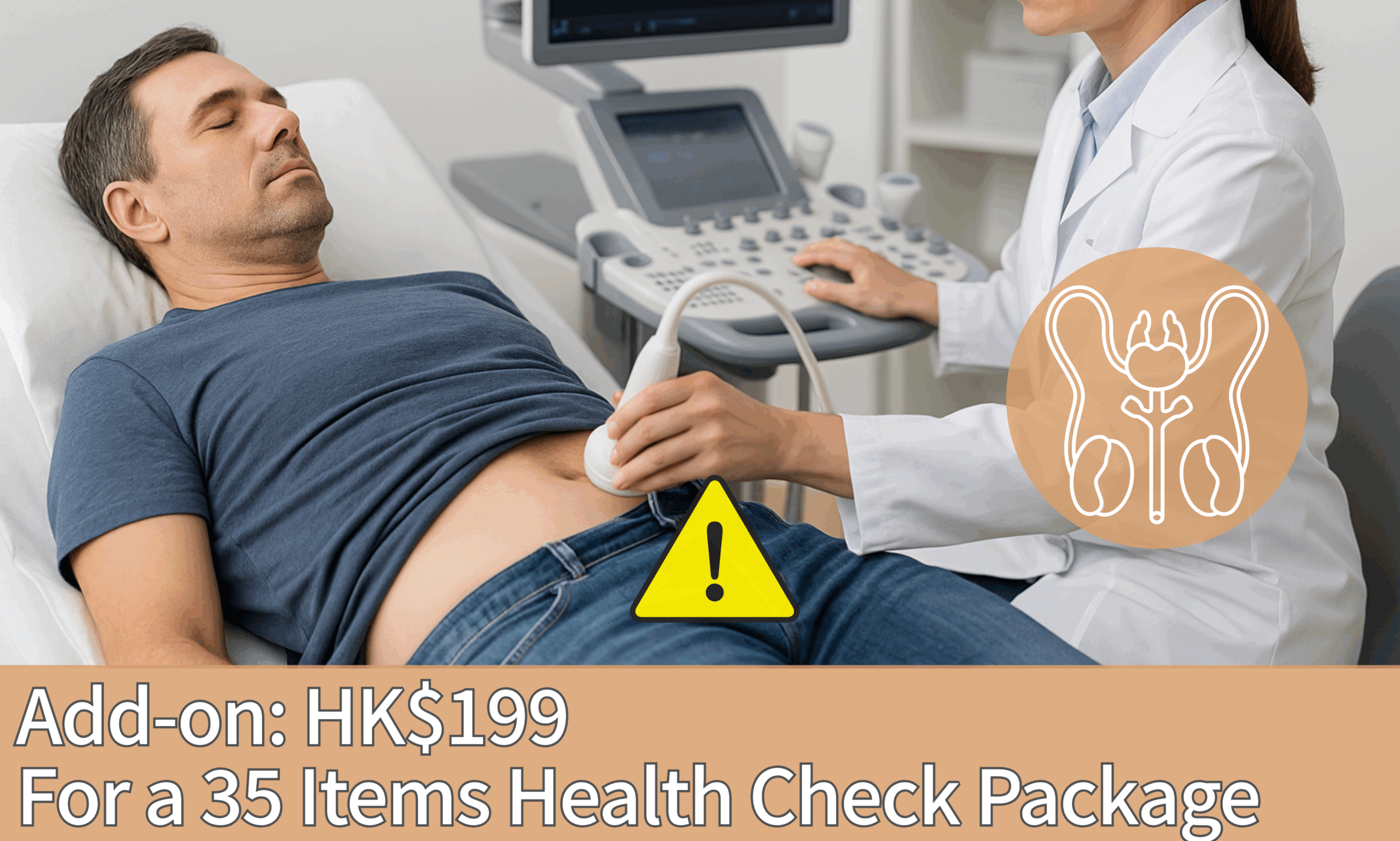
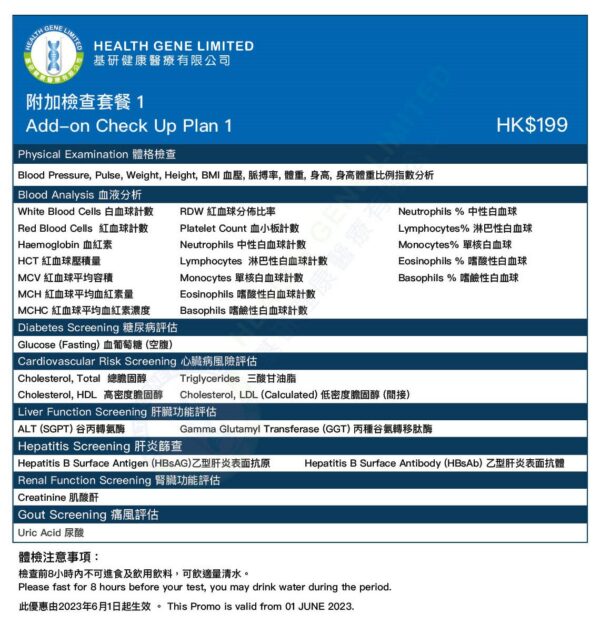
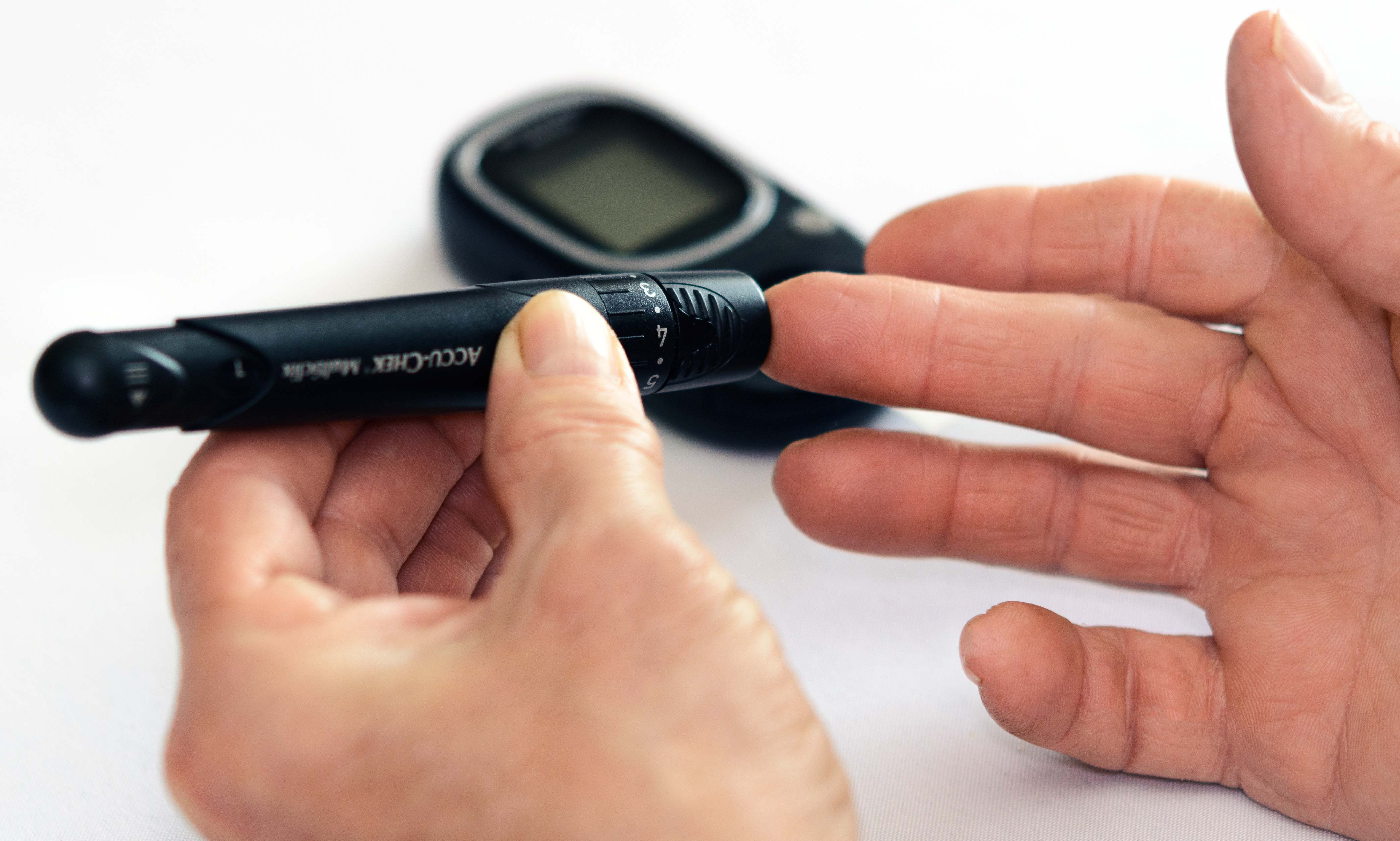
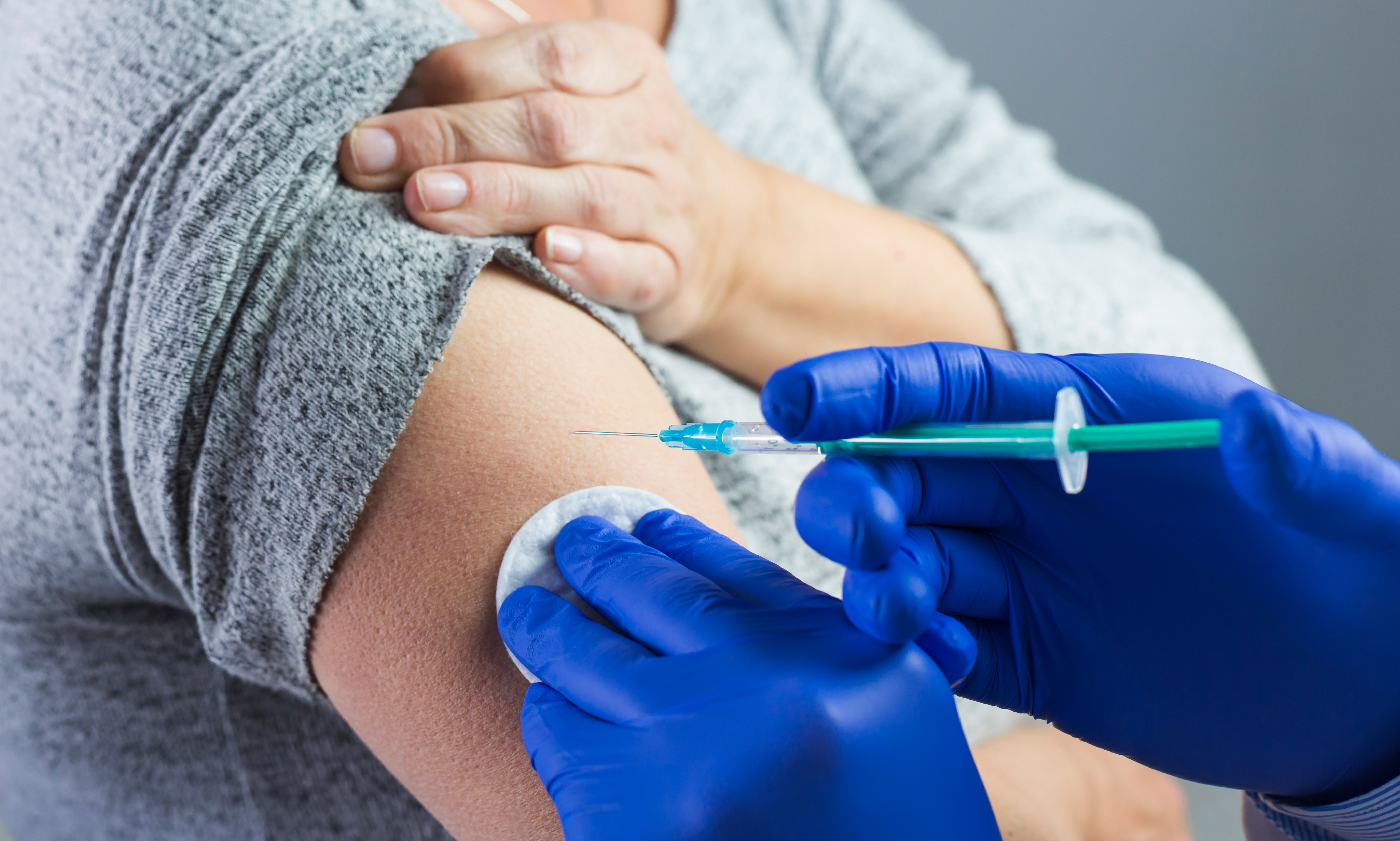
PSA Free & Total blood test with transabdominal prostate & bladder ultrasound. 1–1.5 hours. Results in 7–10 working days; radiologist-signed ultrasound report with clinician review. Add-on: 35-item panel for HK$199.
*Once your order has been placed, our staff will contact you for order confirmation.
*For guests who are comfortable with a male doctor conducting the ultrasound scanning, please feel free to reach our team at 2736 6228 to check for further availability.
🩺【Advanced Prostate Cancer Screening HK | PSA + Ultrasound | HK$1980】
📍 Price: HK$1980 / person
🌡️ Test Included:
Prostate-Specific Antigen (PSA) — Free & Total Ratio
Ultrasound of Prostate & Urinary Bladder (Transabdominal)
🕐 Report Turnaround Time: 7–10 working days
👩⚕️ Result Review: Results clearly explained by GP or medical staff
📄 Ultrasound Report: Written by Radiologist.
🩺 Process: Registration ➝ Blood draw ➝ Ultrasound Scan —around 1-1.5hrs,no fasting required 🎁 Add-on: Add a 35-item health panel for HK$199 at checkout (details at the bottom of this page 👇🏻)
Instructions before the tests:
48 hours before testing, avoid ejaculation, anal intercourse, and vigorous exercise (to prevent PSA elevation).
For the prostate & urinary bladder ultrasound, drink 2–3 cups of water about 1 hour before the scan and avoid urination so the bladder remains comfortably full and distended during imaging.
What is Prostate Cancer?
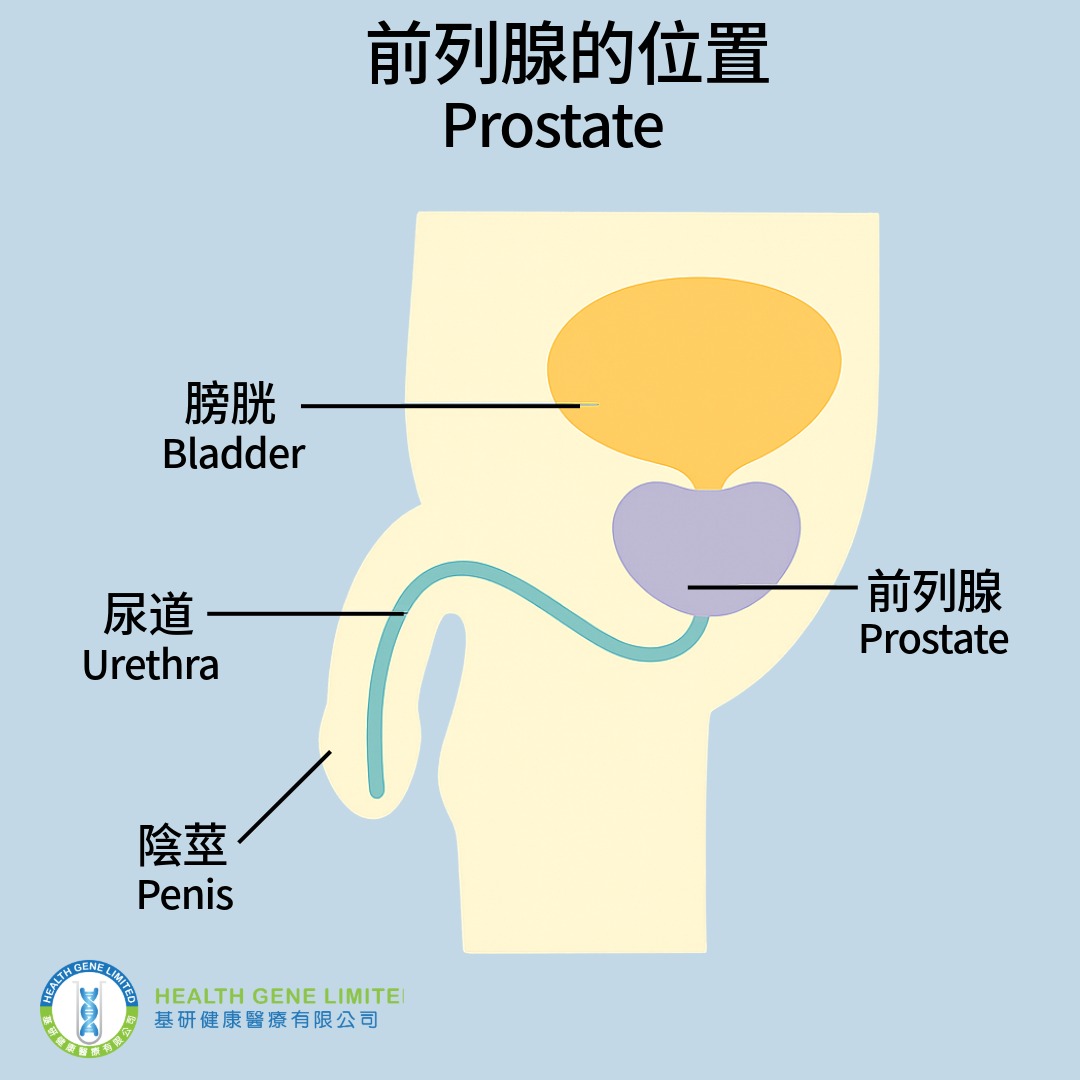
The prostate is a male-specific gland located just below the bladder, surrounding the urethra. When the cells within the prostate undergo genetic changes and begin to grow uncontrollably, they can form a malignant tumor known as prostate cancer.
As the disease progresses, the cancerous cells may invade surrounding tissues or spread to the lymph nodes, bones, or other organs, affecting urination, the skeletal system, and overall health.
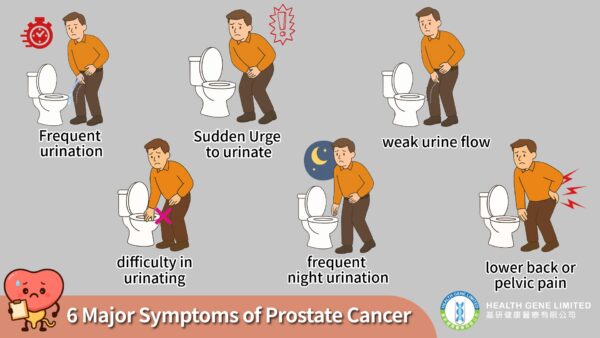
6 Common Symptoms of Prostate Cancer
1️⃣ Weak urine flow 2️⃣ Difficulty in starting urination 3️⃣ Frequent urination 4️⃣ Frequent nighttime urination (nocturia) 5️⃣ Sudden or urgent need to urinate 6️⃣ Persistent pain in the lower back, pelvis, hips, or thighs
Prostate cancer often shows no obvious symptoms in its early stages, so many men are diagnosed only when the disease has advanced.
A combination of PSA (Prostate-Specific Antigen) blood testing and prostate and bladder ultrasound scanning can help detect prostate abnormalities before symptoms appear, greatly improving the chances of early diagnosis.
The prostate and bladder ultrasound allows doctors to visualize the structure and function of these organs, such as prostate size or compression on the bladder outlet.
This provides a more comprehensive evaluation of prostate health and helps determine whether further investigation or referral is necessary.
According to the Hong Kong Cancer Online Resource Centre, when prostate cancer is diagnosed early (Stage I–III), the five-year survival rate can exceed 97%. 🔗 Source: Hong Kong Cancer Online Resource Centre
Who Is at Higher Risk of Prostate Cancer?
Based on local and international data, the main risk factors include:
Age: Risk increases significantly after 50 years old. The median age of diagnosis in Hong Kong is 71. (Source: South China Morning Post)
Family history: Men with a father or brother diagnosed with prostate cancer are at higher risk.
Diet and lifestyle: High-fat diets, obesity, and lack of physical activity may increase risk.
Prostate Cancer Situation and Risks in Hong Kong
New Cases: In 2023, Hong Kong recorded 3,031 new prostate cancer cases, making it the 4th most common cancer among men. The crude incidence rate was88.2 cases per 100,000 males.
Mortality: In 2023, 522 men died from prostate cancer, accounting for 6.1% of all male cancer deaths.
Risk Factors: The risk increases with age, and having a family history also raises the likelihood of developing prostate cancer.
Although there is no guaranteed way to prevent prostate cancer, several lifestyle measures may help reduce the risk:
Maintain a healthy weight and exercise regularly
Eat a balanced diet — limit red meat, fatty foods, and processed foods; increase fruits, vegetables, whole grains, and legumes
Quit smoking and reduce alcohol intake
Men ≥ 50 or those with family risk factors should discuss screening with their doctor
Stay alert to urinary or bone-related symptoms and seek early assessment
Who Should Take the “Advanced” Screening?
Men aged 50 to 69 concerned about prostate health
Those with frequent urination, weak urine flow, urinary difficulty, or blood in urine
Individuals with borderline or slightly elevated PSA levels who wish to use imaging to better assess prostate size and risk
Those with a family history or previously advised to monitor prostate health regularly.
Why Choose the Advanced Prostate Cancer Screening?
Dual Assessment: Blood + Imaging The PSA Free/Total ratio improves cancer risk distinction in “gray zone” PSA cases, while ultrasound measures prostate volume and examines bladder condition for a clearer overall picture.
Non-Invasive, Radiation-Free, Safe, and Comfortable Uses a transabdominal probe — no rectal insertion and no radiation exposure.
More Accurate Follow-Up Decisions When total PSA is slightly elevated, ultrasound adds diagnostic clarity, helping reduce unnecessary biopsies and guide next steps.
Professional Reporting Ultrasound reports are written by registered radiologists, and all results are reviewed and explained by a doctor or medical staff.
Frequently Asked Questions (FAQ)
Q1: Is the ultrasound invasive or painful?
A: No. It is a transabdominal scan — safe, comfortable, and radiation-free.
Q2: What’s the difference between the Advanced and Basic tests?
A: The Basic test includes only PSA Free & Total (blood test), while the Advanced test adds an ultrasound for a more comprehensive evaluation of the prostate and bladder.
Q3: Do I need to fast before the test?
A: No fasting required.
Q4: How should I prepare?
A: Avoid ejaculation, anal intercourse, and vigorous exercise (e.g. cycling) for 48 hours before testing. Drink 2–3 glasses of water 1 hour before the ultrasound and avoid urination to keep your bladder comfortably full.
Q5: Does a high PSA always mean cancer?
A: No. Benign enlargement or inflammation can also raise PSA levels. A doctor will interpret your results based on clinical and imaging findings.
Q6: Do I need follow-up after the test?
A: It depends on your results and risk factors. Your doctor will advise the best follow-up interval and next steps — monitoring trend changes is most important.
Important Note
PSA testing and ultrasound are screening and assessment tools, not diagnostic confirmation.
If abnormalities are found, your doctor may recommend further testing or referral to a urologist for specialist assessment.
Booking Procedure
For more details, please click on Check-up items.
Advanced Prostate Cancer Screening
1. PSA Free & Total Ratio
2. Ultrasound of Prostate & Urinary Bladder (Transabdominal)