👨🏾🦱 Specifically Designed for Men Aged 40 and Above, Covering High-Risk Cancers Such as Nasopharyngeal, Prostate, Liver, Colorectal, Stomach, Pancreatic, Gallbladder, and Testicular!
*Once your order has been placed, our staff will contact you for order confirmation.
*For guests who are comfortable with a male doctor conducting the ultrasound scanning, please feel free to reach our team at 2736 6228 to check for further availability.
7 Key Cancer Markers + Comprehensive Abdominal Ultrasound
📍Price: HK$2,980 / person ⚠️fasting 8 hours prior to the test
⏱️ Report Time: ~7–10 working days
🙎🏼♀️ Result Review: Results clearly explained by GP or medical staff
📃Ultrasound Report: Interpreted and Prepared by a Radiologist 🩺Process: Registration ➝ Blood draw ➝Ultrasound Scan — about 1-1.5 hrs
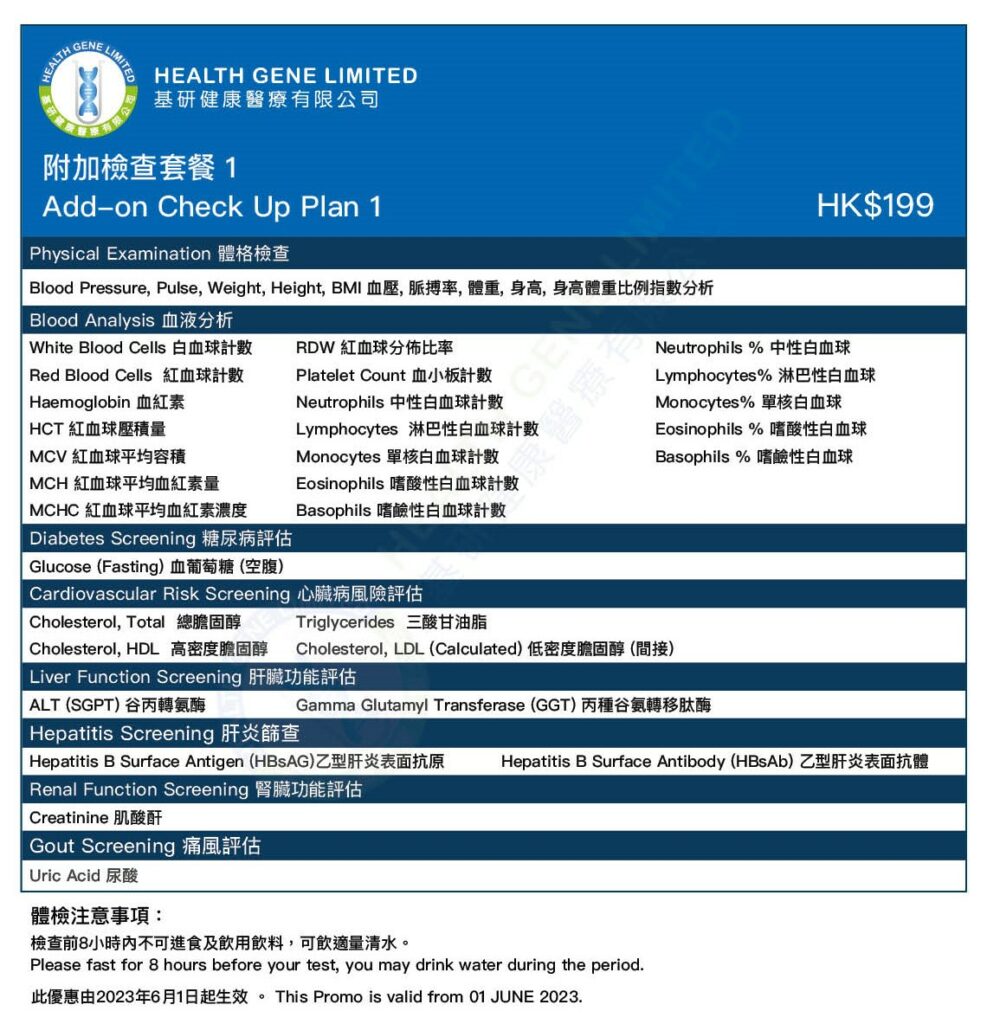
🎁Add-on: Add a 35-items health check package for HK$199 at checkout (details at the bottom of this page 👇🏻)please state “Add $199” in the additional column when checking out of your shopping cart online.
Advanced Cancer Screening for Men package includes the following items:
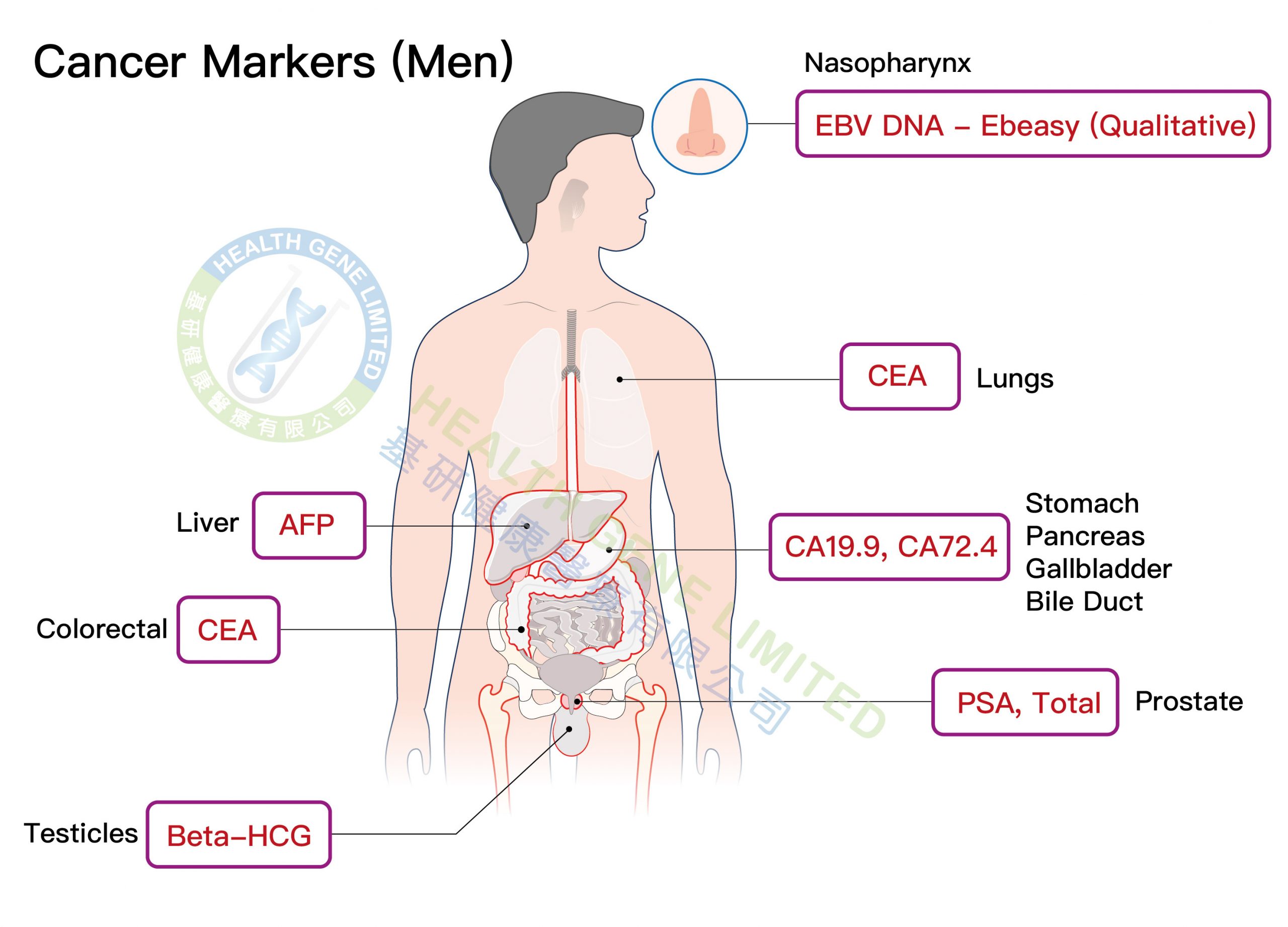
EBeasy (Epstein-Barr Virus, EBV) – Mainly for Nasopharyngeal Carcinoma
Prostate-Specific Antigen, PSA, Total – Prostate Cancer
CEA – Colon Cancer, Lung Cancer
CA 19.9 – Stomach Cancer, Pancreatic Cancer, Gall Bladder / Bile Duct Cancer
CA 72.4 – Stomach Cancer, Pancreatic Cancer
Alpha Fetoprotein, AFP – Liver Cancer
Beta-HCG – Testicular Cancer
Whole Abdomen Ultrasound (Transabdominal)
⚠️fasting 8 hours prior to the test
⚠️Pre-Examination Tips
Fast for at least 8 hours before the examination.
Avoid ejaculation, anal intercourse, and strenuous exercise for 48 hours prior to the test, as these may affect PSA results.
For bladder and prostate ultrasound, please drink 2–3 cups of water approximately 1 hour before the examination and avoid urination, so that the bladder is adequately full to ensure optimal imaging quality.
What is a tumor marker?
A tumor marker is a biomarker found in blood, body tissues, or urine, which can be produced by cancer cells or normal cells in response to cancer in the body.
While some tumor markers are linked to a specific cancer type, others are found in various types of cancers.
Why are they useful?
Screening for common cancers
Diagnosis of specific tumour types
Check if the treatment is effective
Prognosis
Monitoring cancer survivors
EBeasy (Epstein-Barr Virus, EBV)
The EBV (Epstein-Barr Virus) DNA test checks for the presence of EB virus infection through a blood sample. Most nasopharyngeal cancer patients have serum containing EB virus antibodies, making this the most common test for nasopharyngeal cancer. It can detect early-stage nasopharyngeal cancer and is widely used in hospitals in Hong Kong. A negative result indicates no current infection, while a positive result suggests EB virus infection, necessitating further examination through a nasopharyngoscopy.
Prostate-Specific Antigen (PSA, Total)
The Prostate-Specific Antigen (PSA) test measures the level of PSA in the blood, serving as a tumor marker for prostate cancer. The prostate is a small gland in the male reproductive system located beneath the bladder, producing fluid that is part of semen. PSA is normally present at low levels in men’s blood; elevated PSA levels may indicate prostate cancer. However, high PSA levels can also indicate non-cancerous prostate conditions, such as infection or benign prostatic hyperplasia (BPH).
Carcinoembryonic Antigen (CEA)
Carcinoembryonic Antigen (CEA) is a common tumor marker for colorectal cancer. Elevated CEA levels can also be associated with other cancers such as lung, breast, thyroid, pancreatic, liver, stomach, ovarian, and bladder cancers.
Cancer Antigen 19-9 (CA 19.9)
Healthy individuals may have low levels of CA 19-9 in the blood, but high levels are often indicative of pancreatic cancer. Sometimes, elevated CA 19-9 levels may signal other cancer types or certain non-cancerous conditions, including cirrhosis, cholangiocarcinoma, and gallbladder cancer.
Cancer Antigen 72-4 (CA 72-4)
CA 72-4 can be used to test for pancreatic cancer, colorectal cancer, breast cancer, and ovarian cancer, with a particularly high sensitivity for detecting gastric cancer. It is often used as one of the reference indicators for gastric cancer and should be analyzed in conjunction with other tests.
Alpha-Fetoprotein (AFP)
Testing for the level of alpha-fetoprotein in the blood helps to assess whether a person has liver cancer. AFP levels are typically high at birth but drop to very low levels by age one. Healthy adults should show extremely low AFP levels. Elevated AFP levels may indicate liver cancer, ovarian cancer, testicular cancer, as well as liver diseases such as cirrhosis and hepatitis.
The Beta-HCG test is primarily used to diagnose pregnancy but is also essential for identifying trophoblastic diseases and germ cell tumors (such as testicular cancer).
Why Is a Comprehensive Abdominal Ultrasound Essential in Advanced Men’s Cancer Screening?
A comprehensive abdominal ultrasound is a non-invasive imaging examination that allows real-time assessment of structural changes in multiple abdominal and pelvic organs. It plays a critical role in the early detection and risk assessment of cancers in men.
🔎 Addressing the Limitations of Blood Cancer Markers
Cancer markers primarily reflect tumor activity or risk trends, but certain early-stage cancers or structural abnormalities may not immediately be detected through blood test results.
A comprehensive abdominal ultrasound enables direct visualization of organ morphology, helping to identify:
Tumors, nodules, or abnormal masses
Organ enlargement, structural changes, or obstruction
This allows ultrasound findings to complement blood-based cancer markers, enhancing overall screening accuracy.
🧠 Focus on Multiple High-Risk Cancer Sites in Men
This examination covers both the upper and lower abdomen, including key organs such as:
Gallbladder and bile ducts: gallbladder cancer, bile duct obstruction, gallstones
Pancreas: pancreatic tumors (correlated with CA 19.9 and CA 72.4 results)
Kidneys and spleen: masses, hydronephrosis, or structural abnormalities
Prostate and pelvic region: prostate enlargement or suspicious lesions (interpreted alongside PSA levels)
🛡️ Particularly Suitable for Asymptomatic Moderate- to High-Risk Men
Many abdominal and internal organ cancers do not present noticeable symptoms in their early stages, and a significant number of patients are diagnosed only at intermediate or advanced stages.
A comprehensive abdominal ultrasound helps to:
Detect suspicious changes before symptoms develop
Provide proactive and comprehensive health monitoring for men aged 40 and above, or those with smoking habits, alcohol consumption, or a family history of cancer
✅ Safe, Radiation-Free, and Suitable for Repeated Monitoring
No radiation exposure
Safe and efficient examination process
Suitable for regular follow-up or as a baseline health assessment
Frequently Asked Questions (FAQ)
Q1: Is cancer marker testing alone sufficient?
Not necessarily.
Cancer markers indicate tumor activity or risk trends, but some early-stage cancers or structural abnormalities may not cause immediate changes in blood marker levels.
Combining cancer marker tests with a comprehensive abdominal ultrasound allows direct assessment of internal organs, improving the overall completeness of cancer screening.
Q2: What cancers or abnormalities can be detected by a comprehensive abdominal ultrasound?
A comprehensive abdominal ultrasound evaluates multiple vital organs, including the liver, gallbladder, bile ducts, pancreas, kidneys, spleen, prostate, and pelvic structures, helping to detect:
Tumors or nodules
Organ enlargement or structural abnormalities
Bile duct obstruction, cysts, or suspicious lesions
Findings can be further interpreted in conjunction with cancer markers such as AFP, CA 19-9, CA 72-4, and PSA.
Q3: If cancer marker results are normal, is an ultrasound still necessary?
Yes.
In early stages, certain cancers may not yet cause abnormal cancer marker levels, while structural changes in organs may already be present.
Ultrasound imaging helps identify abnormalities that are not detectable through blood tests alone, providing valuable information for further evaluation and follow-up.
Q4: Is a comprehensive abdominal ultrasound safe? Does it involve radiation?
A comprehensive abdominal ultrasound is a non-invasive, radiation-free examination. It is safe and suitable for regular monitoring or baseline health assessment, especially for men aged 40 and above.
Q5: Why is fasting for 8 hours required before the examination?
Fasting helps reduce gastrointestinal gas and gallbladder contraction, allowing clearer imaging—particularly of the liver, gallbladder, and pancreas—thereby improving diagnostic accuracy.
Q6: Who is most suitable for this advanced cancer screening?
This screening is particularly recommended for:
Men aged 40 and above
Individuals with a family history of cancer
Long-term smokers or individuals who consume alcohol regularly
Men concerned about prostate, liver, pancreatic, and gastrointestinal cancer risks
Those seeking a more comprehensive cancer risk assessment
Booking Procedure
For more details on the program, please click check-up items.
Cancer Screening
1. EBeasy Qualitative DNA Test
2. Prostate-Specific Antigen – PSA, Total
3. Carcinoembryonic Antigen (CEA)
4. Cancer Antigen 19.0 (CA 19.9)
5. Cancer Antigen 72.4 (CA 72.4)
6. Alpha-fetoprotein (AFP)
7. Beta-HCG