Combining abdominal and breast ultrasound with 7 tumour marker tests
to provide a comprehensive assessment of common women’s cancer risks and support early detection.
📍Price: HK$3,680 / person ⚠️Fasting 8 hours prior to the test ⏱️ Report Time: ~7–10 working days
🙎🏼♀️Result Review: Results clearly explained by GP or medical staff
🩺Process: Registration ➝ Blood draw ➝ Ultrasound Scan— around 1.5 – 2hrs
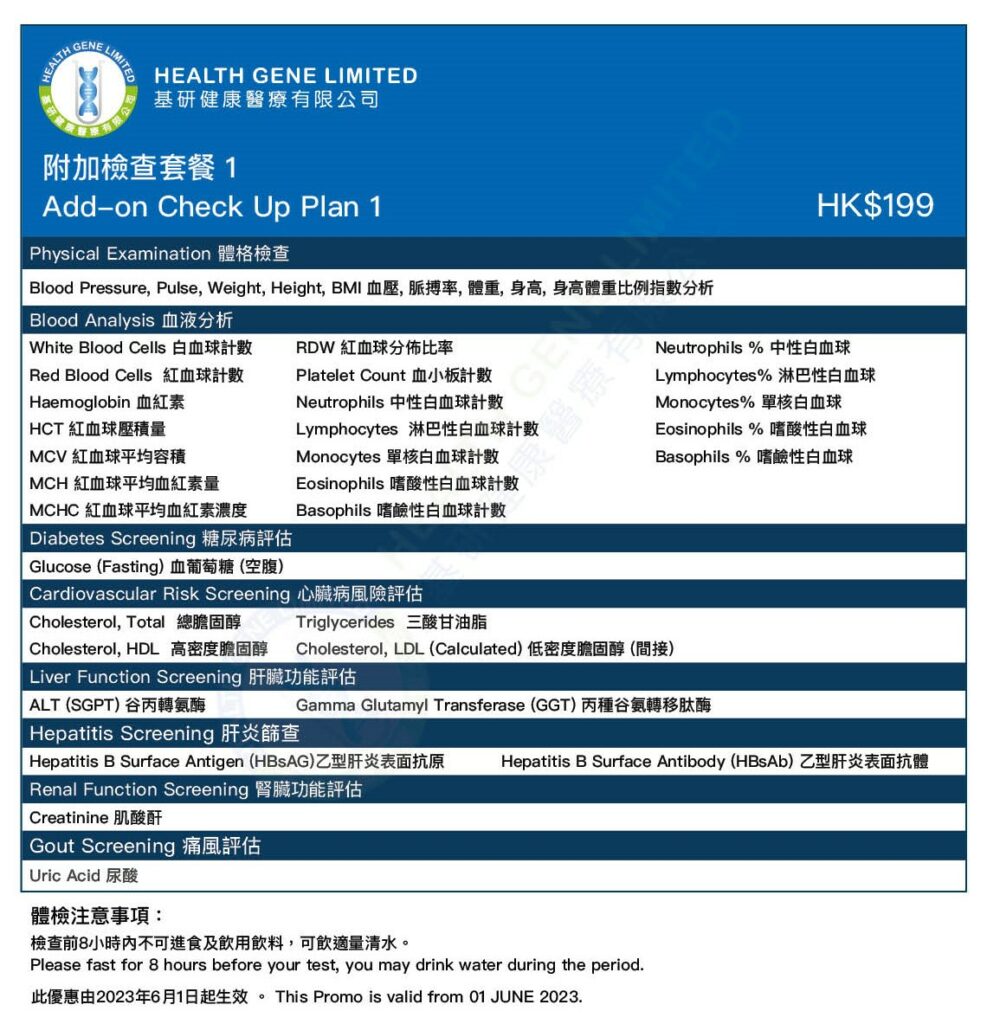
🎁Add-on: Add a 35-items health check package for HK$199 at checkout (details at the bottom of this page 👇🏻)please state “Add $199” in the additional column when checking out of your shopping cart online.
Advanced Cancer Screening for Women package includes:
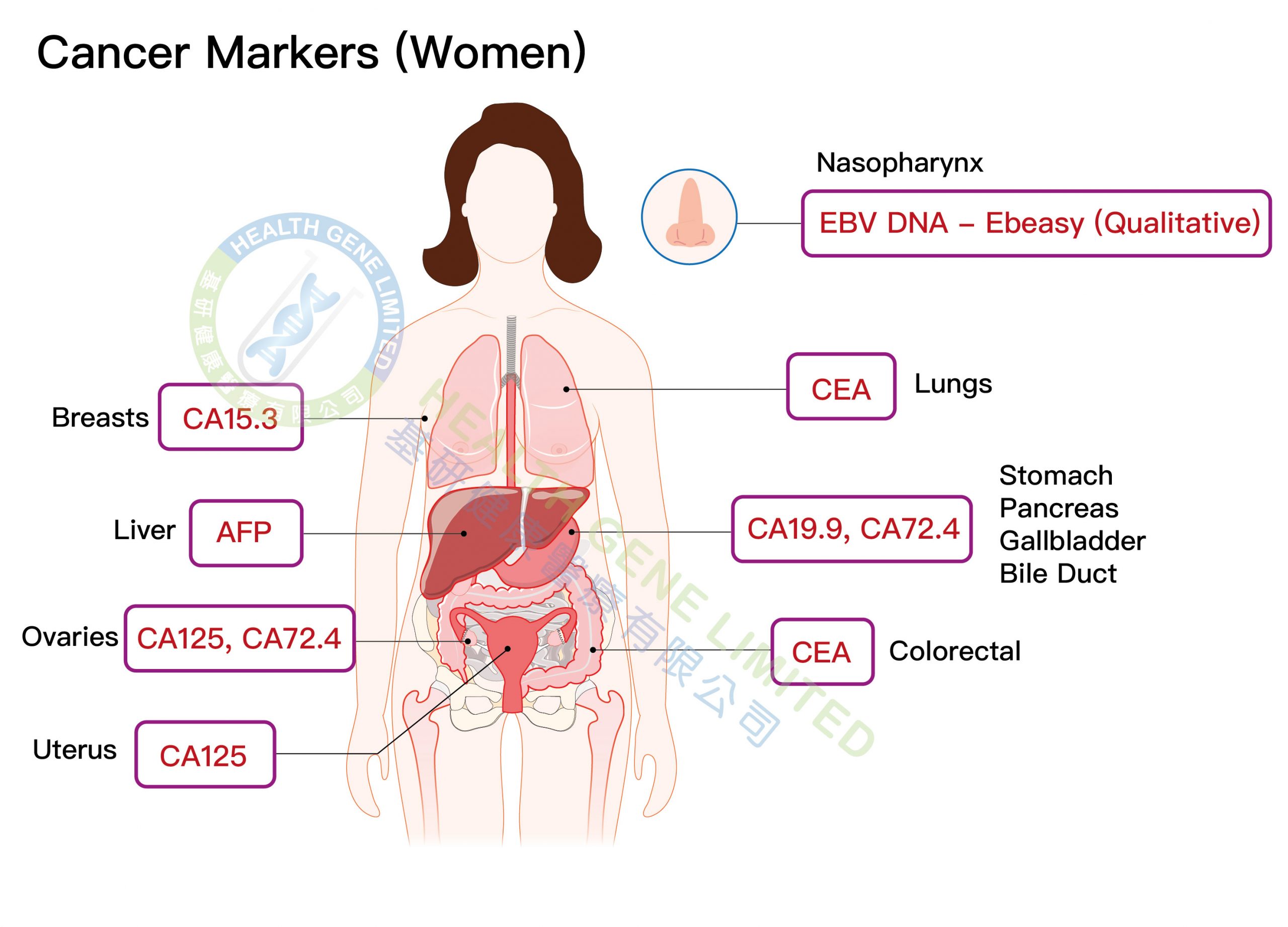
EBeasy (Epstein-Barr Virus, EBV) – Mainly for Nasopharyngeal Carcinoma
CEA – Colon Cancer, Lung Cancer
CA15.3 – Breast Cancer
CA 125 – Ovarian Cancer, Endometrial (Uterus) cancer
CA 72.4 – Stomach Cancer, Pancreatic Cancer, Ovarian Cancer
CA 19.9 – Stomach Cancer, Pancreatic Cancer, Gall Bladder / Bile Duct Cancer
Alpha Fetoprotein, AFP – Liver Cancer
Breast Ultrasound
Whole Abdomen Ultrasound (Transabdominal)
Why Are Both Breast and Abdominal Ultrasound Included in This Screening?
Many women’s cancers may not present obvious symptoms in their early stages, and blood tumour markers alone may not always reflect structural or anatomical abnormalities. Breast and abdominal ultrasound provide real-time imaging of internal organs, allowing doctors to assess physical changes that may not be detectable through blood tests.
Breast ultrasound helps evaluate breast tissue structure and identify suspicious masses, cysts, or abnormalities, particularly in women with dense breast tissue where mammography may be less sensitive.
Abdominal ultrasound enables visual assessment of multiple organs related to women’s cancer risks, including the liver, ovaries, uterus, kidneys, and bladder. It helps detect masses, cysts, organ enlargement, or structural changes at an early stage.
By combining ultrasound imaging with tumour marker analysis, this advanced screening provides a more comprehensive and reliable assessment of women’s cancer risks, supporting earlier detection and timely medical follow-up.
What is a tumor marker?
A tumor marker is a biomarker found in blood, body tissues, or urine, which can be produced by cancer cells or normal cells in response to cancer in the body.
While some tumor markers are linked to a specific cancer type, others are found in various types of cancers.
Why are they useful?
Screening for common cancers
Diagnosis of specific tumour types
Check if the treatment is effective
Prognosis
Monitoring cancer survivors
EB Virus DNA Test
This blood test detects the presence of Epstein-Barr virus (EBV) DNA in the body. Most nasopharyngeal cancer patients in Hong Kong test positive for EBV antibodies, making this one of the most commonly used screening tools for early detection of nasopharyngeal carcinoma.
A negative result indicates no current EBV infection.
A positive result suggests EBV infection, and further evaluation with nasoendoscopy is recommended.
CEA – Carcinoembryonic Antigen
CEA is a common tumor marker, particularly for colorectal cancer. However, elevated levels may also occur in patients with lung cancer, breast cancer, thyroid cancer, pancreatic cancer, liver cancer, gastric cancer, ovarian cancer, and bladder cancer.
CA 15.3 – Cancer Antigen 15.3
CA 15.3 is a protein produced by normal breast cells, but elevated levels are often found in patients with breast tumors. This marker enters the bloodstream through tumor cells and is commonly used to monitor the progression and recurrence of breast cancer.
Higher levels typically correlate with later stages or larger tumor burden.
The highest levels are often observed in metastatic breast cancer, especially with bone or liver involvement.
Normal CA 15.3 levels do not rule out early or localized breast cancer and should be used as a supplementary indicator alongside other diagnostics.
CA 125 – Cancer Antigen 125
CA 125 is used to assess the presence and treatment response of ovarian cancer.
Inherited mutations in the BRCA1 or BRCA2 genes significantly increase ovarian cancer risk.
Elevated CA 125 may also be seen in non-cancerous conditions (e.g. menstruation, fibroids) and other cancers such as endometrial, peritoneal, and fallopian tube cancer.
CA 19.9 – Cancer Antigen 19.9
While healthy individuals may have low levels of CA 19.9, elevated values are often associated with pancreatic cancer.
High levels can also indicate other cancers such as bile duct or gallbladder cancer, or benign conditions like cirrhosis.
CA 72.4 – Cancer Antigen 72.4
CA 72.4 is useful in detecting cancers such as pancreatic, colorectal, breast, and ovarian cancer. It is particularly sensitive for gastric cancer, and thus is often used as a reference marker alongside other diagnostic tests.
AFP – Alpha-Fetoprotein
AFP is a protein normally produced in the fetus, with levels dropping after birth.
Elevated AFP in adults may signal liver cancer, ovarian cancer, testicular cancer, or chronic liver diseases such as hepatitis or cirrhosis.
✅ Who Should Consider This Screening?
Women aged 35 or above
Those with a family history of cancer (e.g., breast, ovarian, nasopharyngeal cancer)
Individuals experiencing persistent fatigue, abnormal weight changes, or irregular menstruation
Women seeking regular preventive health check-ups
Individuals with previously elevated tumor marker results requiring follow-up
❓ Frequently Asked Questions (FAQ)
Q1: Why does this screening include both breast and abdominal ultrasound?
Breast and abdominal ultrasound provide real-time imaging of internal organs, allowing doctors to assess structural changes that may not be detected through blood tests alone. Including both scans enhances early detection and provides a more comprehensive assessment of women’s cancer risks.
Q2: Are tumour marker tests alone sufficient for cancer screening?
Tumour markers are useful for risk assessment, but they may not detect early-stage or structural abnormalities. Ultrasound imaging complements tumour marker testing by providing direct visual evaluation of organs, improving overall screening accuracy.
Q3: What organs are assessed during abdominal ultrasound?
Abdominal ultrasound evaluates multiple organs related to women’s cancer risks, including the liver, gallbladder, pancreas, kidneys, bladder, uterus, and ovaries. It helps identify masses, cysts, organ enlargement, or other structural abnormalities.
Q4: Is ultrasound safe? Does it involve radiation?
Yes, ultrasound is safe and does not involve radiation. It uses sound waves to create images and is non-invasive and painless, making it suitable for regular health screening and follow-up.
Q5: Who should consider this advanced women’s cancer screening?
This screening is suitable for women aged 35 and above, those with a family history of cancer, or anyone seeking a more comprehensive assessment beyond basic cancer screening tests.
Q6: Can ultrasound detect cancer definitively?
Ultrasound is a screening and assessment tool that helps identify abnormalities or suspicious findings. It does not provide a definitive cancer diagnosis but supports early detection and timely referral for further medical evaluation if needed.
For more details on the program, please click check-up items.
Cancer Screening
1. EBeasy Qualitative DNA Test
2. Carcinoembryonic Antigen (CEA)
3. Cancer Antigen 15.3
4. Cancer Antigen 19.9
5. Cancer Antigen 72.4
6. Cancer Antigen 125
7. Alpha-fetoprotein (AFP)
Ultrasound
Breast Ultrasound
Whole Abdomen Ultrasound (Transabdominal)