$7,000.00Original price was: $7,000.00.$4,280.00Current price is: $4,280.00.
Reservation Deposit: HK$200
Check Up Location: Suite 1424-1425, 14/F, Ocean Centre, 5 Canton Road, Tsim Sha Tsui, Kowloon
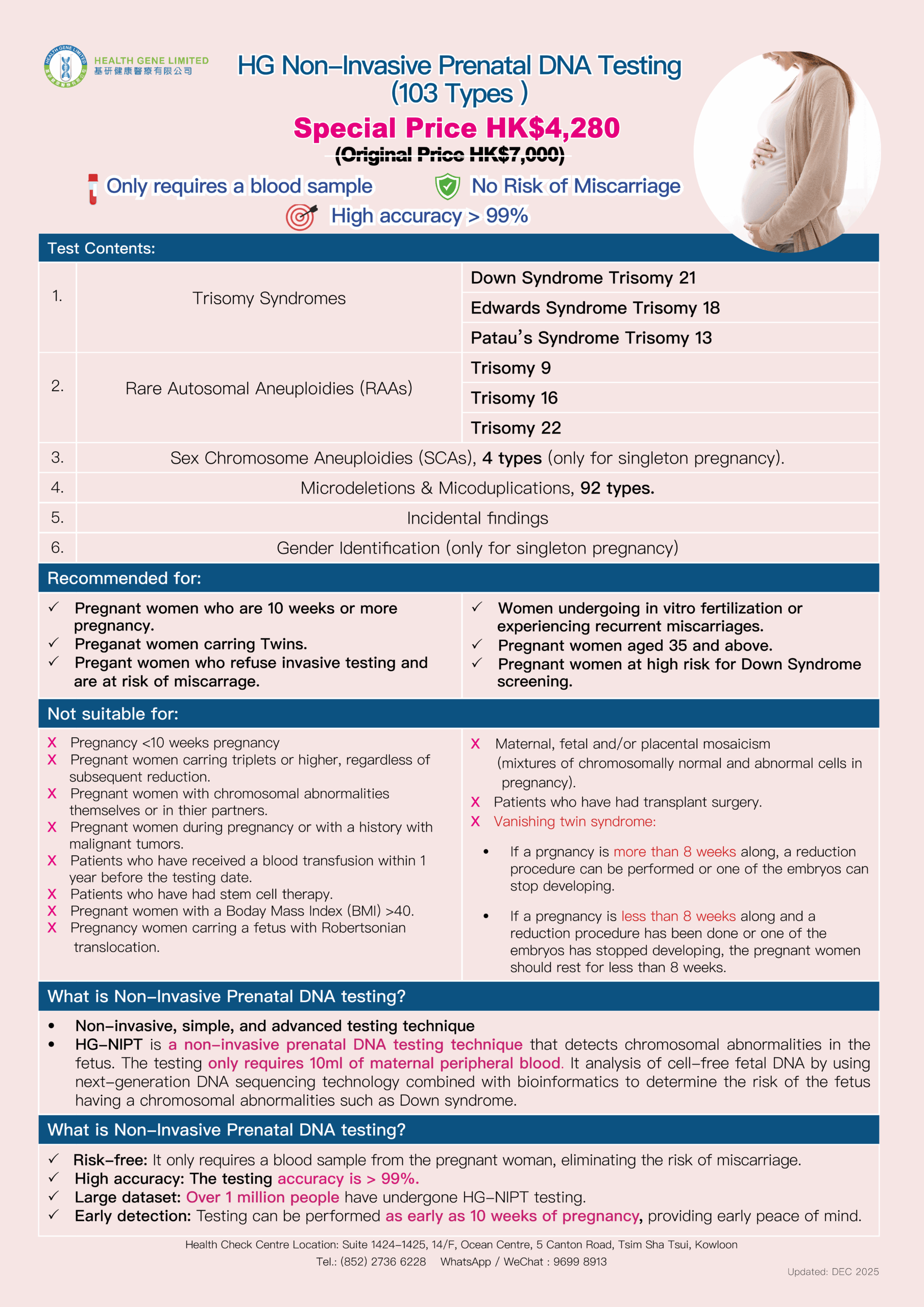
The Non-Invasive Prenatal Testing (HG-NIPT) is an advanced prenatal screening designed to assess the risk of fetal chromosomal abnormalities, primarily Down syndrome (Trisomy 21), with an accuracy of up to 99%. By analyzing fetal DNA from a small sample of the mother’s blood, this test offers a safe and non-invasive alternative to procedures like amniocentesis, posing no risk to the mother or baby. Suitable for pregnant women who are 10 weeks or more into pregnancy, the HG-NIPT allows expectant parents to gain early insight into potential risks and make informed decisions for a safer pregnancy journey.
【Non-Invasive Prenatal Genetic Test (HG-NIPT) – 103 Items | Safe Screening for Down Syndrome and Other Major Chromosomal Abnormalities】
A safe and non-invasive test performed through a simple maternal blood draw.
📣 Special Price: HK$4,280 per person(Original Price: HK$7,000)
📄 Report Turnaround Time: Approximately 7–10 working days
⚠️ Eligibility:Pregnant women who are10 weeks or more pregnancy (Before the test, our medical professionals will conduct a consultation to ensure you are suitable for the screening.)
👩⚕️ Report Explanation: Results will be clearly explained by GP doctor or medical staff.
🩺 Testing Procedure: Registration ➝ Pre-test consultation and consent form ➝ Blood draw. Estimated total time: 30–45 minutes
❌No fasting required
*Offers are non-transferable. In case of any dispute, Health Gene Limited reserves the right of final decision*
HG Non-Invasive Prenatal DNA Testing (HG-NIPT), 103 items Test Contents:
1. Trisomy Syndromes:
Down Syndrome Trisomy 21
Edwards Syndrome Trisomy 18
Patau’s Syndrome Trisomy 13
2. Rare Autosomal Aneuploidies (RAAs):
Trisomy 9
Trisomy 16
Trisomy 22
3. Sex Chromosome Aneuploidies (SCAs), 4 types (only for singleton pregnancy).
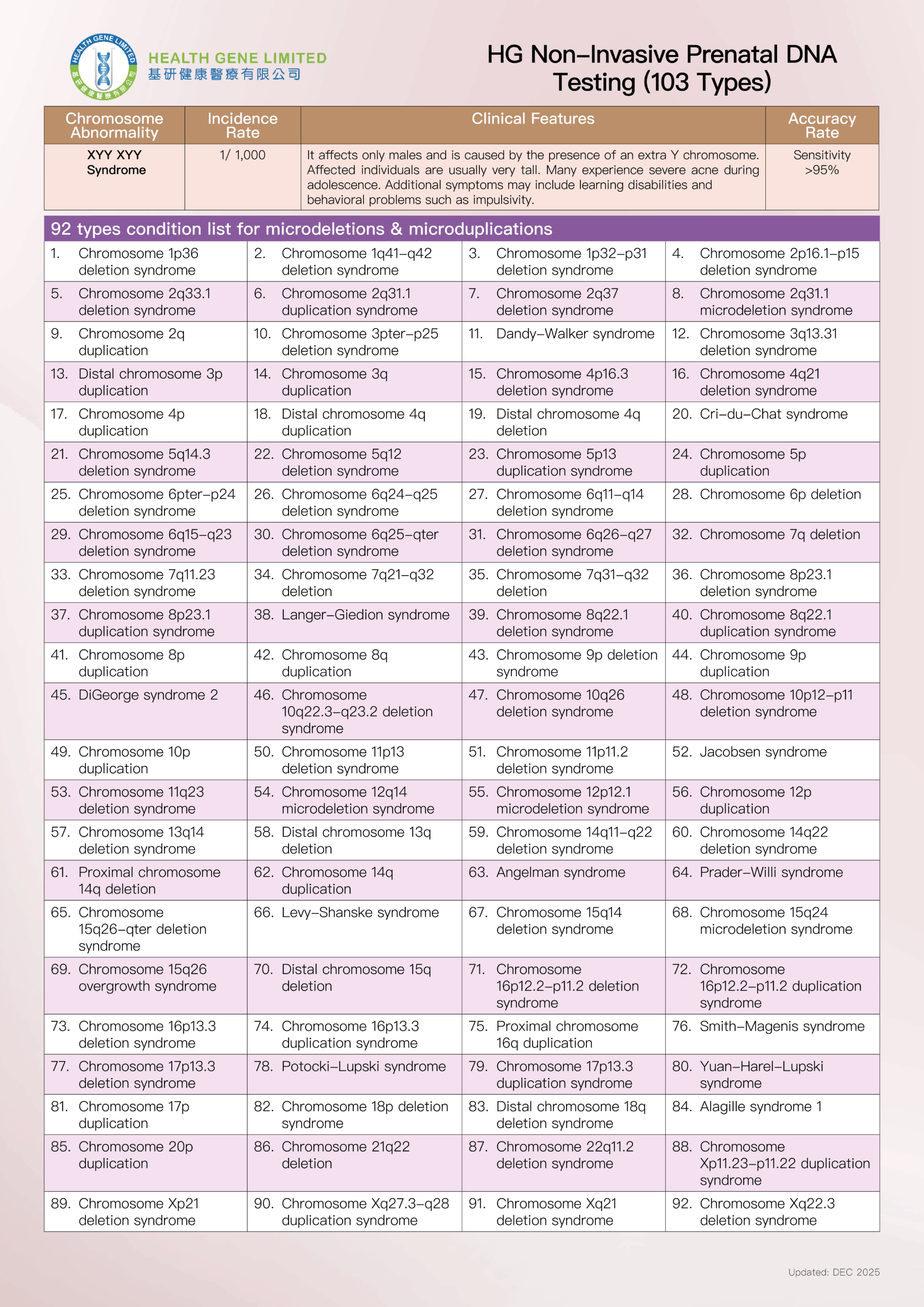
4. Microdeletions & Micoduplications, 92 types.
5. Incidental findings
6. Gender Identifcation (only for singleton pregnancy)
What is Non-Invasive Prenatal DNA testing?
Non-invasive, simple, and advanced testing technique.
HG-NIPT is a non-invasive prenatal DNA testing technique that detects chromosomal abnormalities in the fetus. The testing only requires 10ml of maternal peripheral blood. It analysis of cell-free fetal DNA by using next-generation DNA sequencing technology combined with bioinformatics to determine the risk of the fetus having a chromosomal abnormalities such as Down syndrome.
Advantages of Non-Invasive Prenatal Genetic Testing (HG-NIPT) ✔️ No invasive procedures required – no amniocentesis needed; only 10ml of maternal blood is drawn, with no risk of miscarriage
✔️ Accuracy rate of up to 99%
✔️ Backed by data from over 1 million cases
✔️ Can be performed as early as 10 weeks of pregnancy – the earlier you test, the sooner you gain peace of mind
👉🏻 Empowering expectant mothers with data and confidence for a safer pregnancy.
Who is Suitable for the HG-NIPT Test?
✔️ Pregnant individuals who are at least 10 weeks into gestation
✔️ Expectant mothers with a history of miscarriage or fetal abnormalities
✔️ Those who conceived through IVF or assisted reproductive technologies
✔️ Individuals with a family history of chromosomal disorders or who previously carried an affected fetus
✔️ Pregnant individuals concerned about the risks of invasive procedures (e.g., amniocentesis)
✔️ Women who became pregnant through egg or sperm donation
As maternal age increases, the risk of the fetus having Down syndrome also rises. Therefore, pregnant individuals aged 35 or above are generally more concerned about prenatal screening for Down syndrome.
This test is not recommended for the following cases due to technical limitations:
Pregnancies involving triplets or more (even if selective reduction has been performed)
Twin pregnancies where fetal reduction was performed after 8 weeks of gestation
Less than 8 weeks since the last fetal reduction procedure
Pregnant individuals or their partners who are known carriers of chromosomal abnormalities
Pregnancies involving placental mosaicism
Pregnancies involving a fetus with Robertsonian translocation
Gestational age of less than 10 weeks
If you are unsure whether this test is suitable for you, please consult your doctor or a qualified healthcare professional.
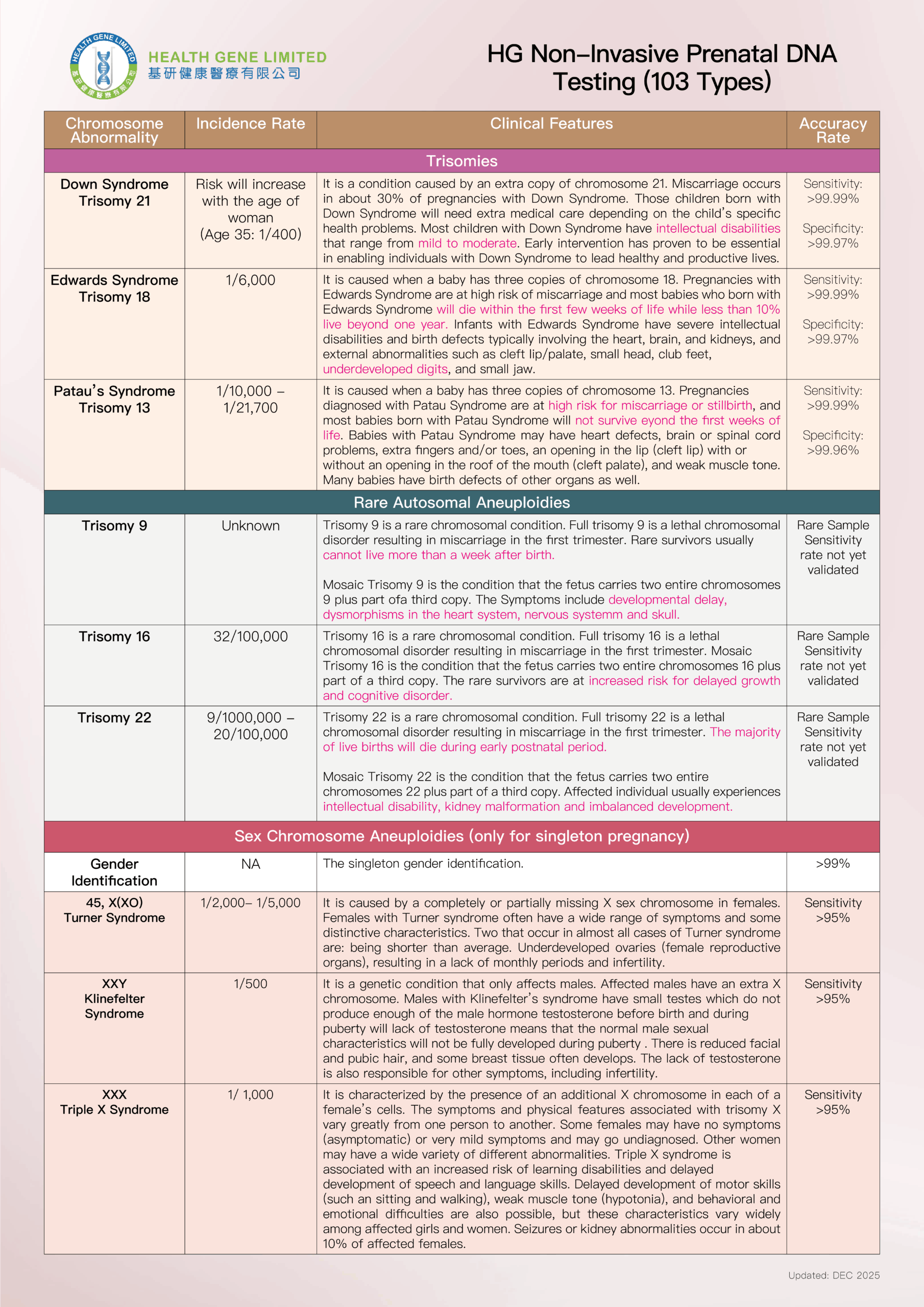
Down syndrome is a congenital condition caused by a chromosomal abnormality. Normally, humans have 23 pairs of chromosomes, totaling 46. However, individuals with Down syndrome have an extra copy of chromosome 21, resulting in 47 chromosomes in total. This additional chromosome affects a child’s physical and cognitive development, which is why Down syndrome is also referred to as “Trisomy 21.”
Prevalence: Affects approximately 1 in every 700 newborns. The risk increases with maternal age.
Characteristics: Intellectual disability, distinctive facial features, and potential congenital heart defects or other health issues.
Significance: Although life expectancy has improved significantly, there is no cure. Lifelong medical care and support are typically required.
T18: Edwards Syndrome
Edwards syndrome is a severe congenital chromosomal disorder caused by an extra copy of chromosome 18 (Trisomy 18), increasing the total chromosome count to 47. This condition leads to abnormal development of multiple fetal organs, including the heart, brain, and limbs, often resulting in extremely limited life expectancy. Most affected babies pass away within weeks or months after birth.
Prevalence: Affects about 1 in 6,000 births. Around 50% of affected fetuses miscarry after 10 weeks. Survival rate is very low, with only a few living beyond their first year.
Significance: Due to its high fatality rate, early prenatal screening is critical. It allows parents to identify the condition as early as possible and make informed medical and emotional preparations.
T13: Patau Syndrome
Patau syndrome is a rare and severe congenital disorder caused by an extra chromosome 13 (Trisomy 13), resulting in 47 chromosomes in total. This abnormality can cause major developmental issues affecting multiple organs and often includes severe intellectual disability. Most cases are due to random errors in cell division during the formation of sperm or egg cells, though some are related to structural chromosomal abnormalities in the parents (translocations).
Prevalence: Affects approximately 1 in 10,000 to 20,000 births. Risk increases with maternal age.
Characteristics: Brain malformations, cleft lip or palate, and serious organ defects.
Significance: Average life expectancy is around 4 to 6 months, with the majority of affected infants not surviving past their first year.
While research confirms that older mothers have a higher risk of carrying a fetus with chromosomal abnormalities, most such conditions occur randomly and are not directly related to maternal age. Therefore, even younger mothers should not overlook the importance of screening. It is strongly recommended that all expectant mothers undergo chromosomal testing and regular prenatal check-ups to monitor the baby’s health—so that every family can be better prepared to welcome new life with peace of mind.
Welcome to download👉🏻 📕the BROCHUREto check out the details.
Item / Screening Method
HG -NIPT
(Non-Invasive Prenatal Testing)
Traditional Maternal Serum Screening
(OSCAR Test)
Amniocentesis (Invasive)
Accuracy
>99%
Approximately 70-90%
>99.9%
Miscarriage Risk
0%
0%
0.1-0.2%
Recommended Gestational Age
From 10 weeks onwards
Around 11-13 weeks
Around 16-21 weeks
Invasive Procedure
Yes
No
Yes
❓ Frequently Asked Questions (FAQ)
What is NIPT and what does it screen for? NIPT (Non-Invasive Prenatal Testing) is a non-invasive prenatal chromosomal screening that primarily detects conditions such as Down syndrome (T21), Edwards syndrome (T18), and Patau syndrome (T13).
When can I take the test? You must be at least 10 weeks pregnant. A healthcare professional will conduct a preliminary assessment before proceeding.
Is the test risky? No. The test only requires 10ml of maternal peripheral blood. It is safe, non-invasive, and poses no risk of miscarriage.
Is it accurate? Yes. The test has an accuracy rate of over 99%, providing highly reliable results.
Do I need to fast before the test?
No fasting is required. The entire process—including registration and blood collection—takes approximately 30 to 45 minutes.
Who is this test suitable for? It is recommended for all pregnant individuals, especially those who:
• Are aged 35 or above
• Have a history of fetal abnormalities
• Have a family history of genetic disorders
• Are concerned about their baby’s health
When will I receive the results? The report will be available in approximately 7–10 working daysand will be explained clearly by a doctor or healthcare professional.
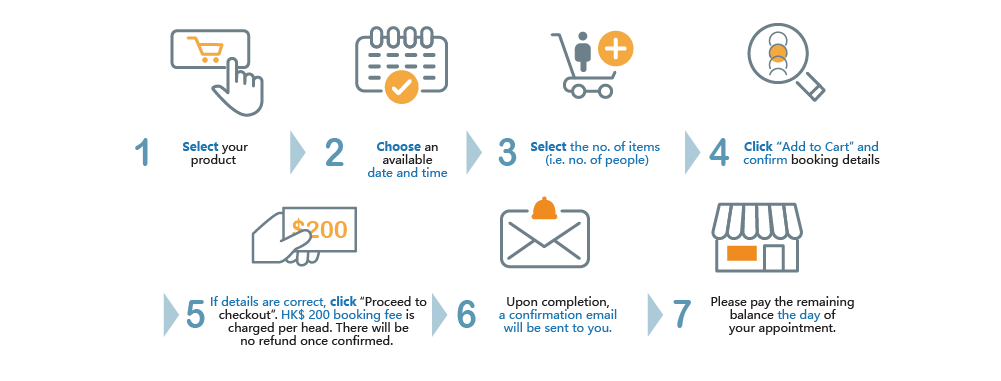
Booking Procedure
For more details on the program, please click on the program.
Chromosomal Aneuploidies
Trisomy 21 (Down Syndrome)
Trisomy 18
Trisomy 13
Sex chromosome aneuploidies (Only for Singleton Pregnancy)